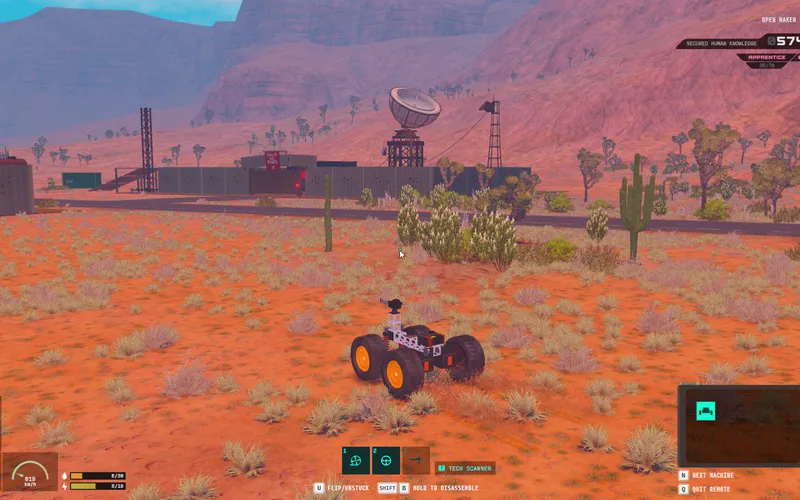
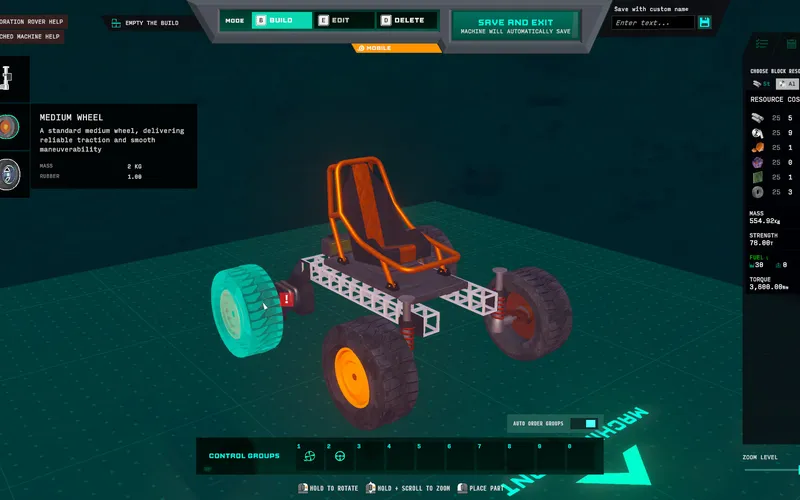
What types of machine parts exist in The Maker Way?
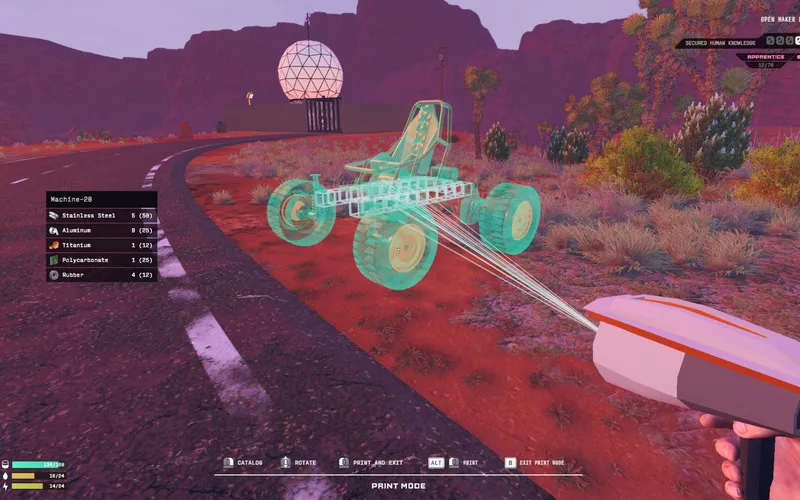
The Maker Way organizes machine engineering across four fundamental part families: structural chassis blocks, mechanical joints and actuators, propulsion and steering modules, and specialized tactical electronics. Every component printed contributes to the total vehicle mass, energy draw, and aerodynamic profile, directly influencing whether your design drives, flies, or crawls across rugged desert terrain.
1. Structural Chassis Blocks
Structural blocks form the physical skeleton of your machine, determining collision resistance and mounting surfaces for heavier hardware.
| Part Category | Function | Material Impact | Verified Status |
|---|---|---|---|
| Light Composite Blocks | Frame skeleton & aerodynamic fairings | Low weight, moderate structural integrity | Confirmed in Demo 2.0 |
| Heavy Reinforced Blocks | Armored plating & core component protection | High mass, superior resistance to robot fire | Confirmed in Demo 2.0 |
| Mounting Struts | Extension arms for sensors and weapons | Minimal mass, specialized attachment nodes | Confirmed in Demo 3.0 |
| Enclosed Cockpits | First-person driver housing & HUD relay | Medium mass, central pilot safety cell | Official Steam Feature |
(Exact block hit points, armor ratings, and tensile break thresholds: 官方尚未公布 / Not yet announced)
2. Mechanical Joints & Actuators
Mechanical joints enable dynamic movement, articulated suspension, and robotic utility arms.
- Suspension Links: Absorb uneven terrain impacts, preventing rovers from flipping during high-speed desert transit.
- Rotary Turret Rings: Provide 360-degree rotation angles for mounted mining drills, hacking antennas, or defense weapons.
- Hinges & Articulated Arms: Allow folding wing configurations and deployable drill rigs.
3. Propulsion & Steering Modules
Engines and directional thrusters convert stored electrical and combustible energy into kinetic movement.
- All-Terrain Drive Wheels: High-traction ground locomotion units designed for dune climbing and rocky canyons.
- Flight & Hover Thrusters: Vertical and horizontal propulsion pods enabling aerial drones and hover transports.
- RCS Attitude Adjusters: Micro-thrusters providing rotational pitch, roll, and yaw control for airborne craft.
(Engine horsepower, maximum thrust kilo-newtons, and fuel consumption rates: 官方尚未公布 / Not yet announced)
4. Tactical Electronics & Mission Modules
Mission hardware transforms a simple vehicle into a specialized fleet asset.
- Data Drive Bays: Hardened containment compartments built to securely transport stolen government data drives.
- Remote Server Hackers: Directional signal antennas used to breach terminal firewalls from distance.
- Resource Mining Heads: Heavy drills and disintegration beam emitters for breaking mineral outcrops.
Engineering Best Practices
- Protect Essential Modules: Encapsulate battery cells and fuel tanks within an armored internal frame.
- Optimize Center of Gravity: Keep heavy engines and ammo reservoirs low to prevent rollover instability.
- Decouple Control Systems: Set independent keybindings for weapon triggers, drill actuation, and propulsion thrusters.
Frequently Asked Questions
Can you build flying machines in The Maker Way?
Yes. Official developer specifications confirm that players can engineer machines that drive, fly, fight, and mine resources using modular propulsion and aerodynamic parts.
Does part material choice change machine performance?
Yes. Official patch notes for Demo v0.0.27 confirm that choosing different block resources during 3D-printing directly alters both machine mass and overall durability.
Are part recipes locked behind progression?
Players retrieve lost knowledge and technical data from government installations, expanding available build prefabs and advanced component schematics as progress advances.