How should you design your base network in The Maker Way?
A successful base network in The Maker Way links forward frontier outposts with rear-echelon research laboratories. Because the Arizona 2039 open world contains extensive desert expanses, single-base strategies lead to battery starvation and fuel exhaustion during long excursions. By constructing an interconnected web of refueling stations and defensive nodes, engineers establish safe logistics corridors into government-held territory.
Grid Architecture: Hub-and-Spoke vs. Linear Highway
Depending on your territory and current tech level, two network topologies offer distinct advantages:
[ Linear Highway ]                  [ Hub-and-Spoke Network ]
                                              [ Outpost B ]
[ HQ ] ===> [ Relay 1 ] ===> [ Front ]             ^
                                                   |
                                     [ Outpost A ] <-> [ Central HQ ] <-> [ Outpost C ]
                                                   |
                                                   v
                                              [ Outpost D ]
1. The Linear Highway Layout
- Best For: Early-game progression pushing toward a distant government server bunker.
- Design: Chain small fueling and battery recharge stations every few kilometers along a direct canyon road.
- Advantage: Low resource expenditure while extending expedition vehicle range.
2. The Hub-and-Spoke Network
- Best For: Mid-to-late game territory control and fleet management.
- Design: A central, heavily defended research compound surrounded by specialized outposts (mining silos, radar towers, and forward defense turrets).
- Advantage: High resilience; losing a forward outpost does not disrupt central fabrication capabilities.
Outpost Layout Blueprint Within a Single Base
When laying out structures within an individual base boundary:
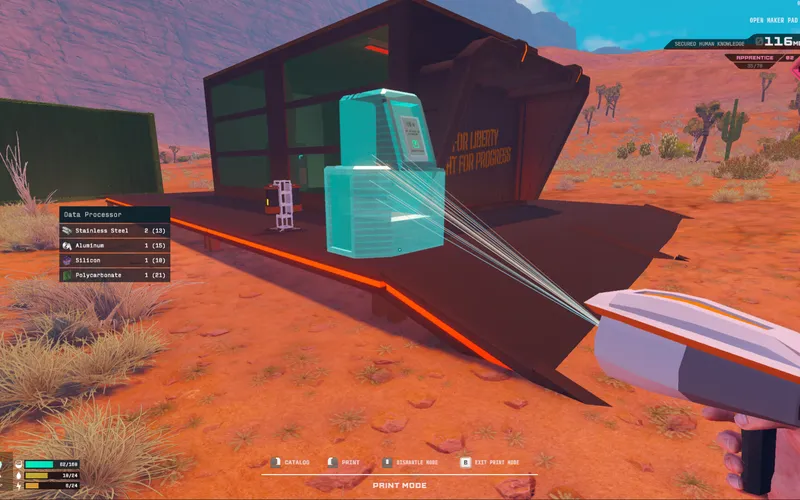
- Inner Core (Protected): House your 3D-printing fabricators and data storage silos in the most protected central or rear location, shielded by terrain.
- Intermediate Ring: Place solar arrays, battery banks, and fuel tanks around the core with protective perimeter blast walls.
- Outer Ring (Access & Defense): Position drive-through vehicle docking pads, automated repair stations, and turret towers facing exterior approach lanes.
(Structure build radii and terrain elevation build restrictions: 官方尚未公布 / Not yet announced)
Logistics & Transit Best Practices
- Natural Chokepoint Utilization: Position outpost defensive walls between canyon bluffs to minimize the width of perimeter fencing required.
- Clear Approach Lanes: Avoid placing storage bins directly in front of vehicle recharge pads to ensure high-speed entry without collisions during hot extractions.
- Sightlines for Radar: Mount long-range scanning antennas atop natural hilltops to extend warning times before robot patrols enter outpost perimeter airspace.
Frequently Asked Questions
Can outposts share stored resources automatically?
Automated inter-base resource transport systems or conveyor links have not been officially confirmed; manual hauling using transport rovers is currently the primary method.
How do you prevent patrol robots from tracking you to your base?
Ensure no pursuit drones remain in active visual contact when entering your base perimeter. Defensive chokepoint turrets can eliminate trailing scouts before they log base coordinates.
Does building more structures attract more robot attacks?
Government robot AI escalation based on outpost footprint and industrial power draw has been previewed in developer community posts, though precise threat scaling formulas remain unannounced.